Kerala art forms and dance: a guide to the state’s living traditions
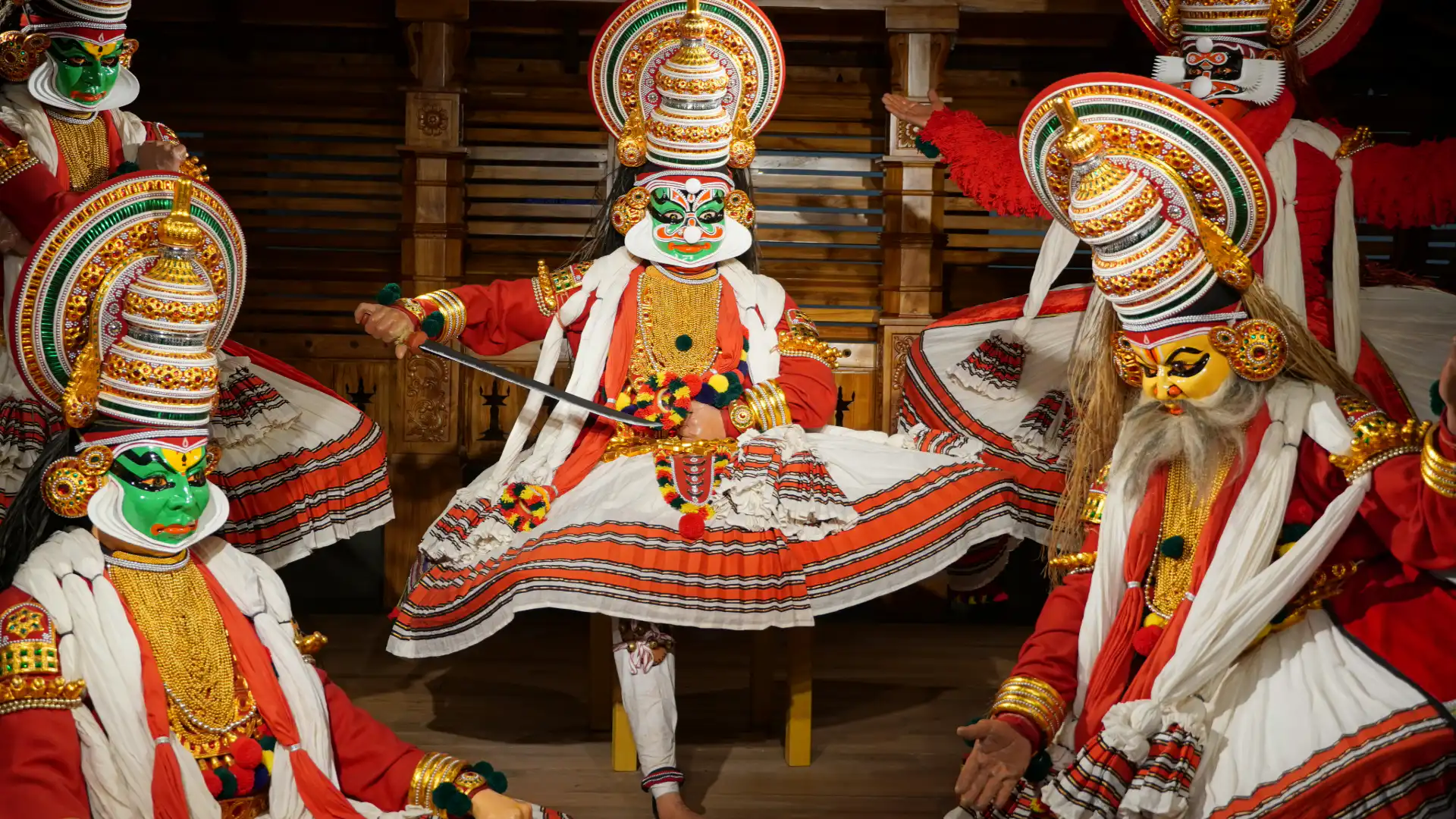
Table of contents:
- Key Takeaways
- Understanding Kerala’s artistic traditions
- How the state’s regions and communities shape its art
- The influence of temples, festivals and royal courts
- How performance traditions are passed between generations
- Classical dance and theatre
- Kathakali’s stories, expressive makeup and stylised movement
- Mohiniyattam’s graceful movement and lyrical expression
- Koodiyattam and the tradition of Sanskrit theatre
- Ritual and ceremonial performance
- Theyyam’s sacred performances in North Kerala
- Padayani’s masks, rhythm and temple rituals
- Thirayattam’s blend of dance, music and worship
- Folk and community dances
- Thiruvathirakali and the circular dance tradition
- Oppana as a celebration of Kerala’s Mappila culture
- Margamkali and Kolkali in community gatherings
- The elements that bring performances to life
- Gesture, facial expression and storytelling
- Percussion and the role of live music
- Costumes, masks and makeup as visual storytelling
- Experiencing Kerala’s art forms respectfully
- Where to see performances, from festivals to cultural centres
- What to know about timing, setting and audience etiquette
- How tourism and cultural preservation shape the future of these traditions
- Conclusion
- Frequently Asked Questions
- What are some well-known art forms from Kerala?
- Is Kathakali a dance or a theatre form?
- What makes Mohiniyattam different from Kathakali?
- Where is Theyyam performed?
- What is Oppana traditionally associated with?
- Can visitors attend ritual performances?
- How can you show respect while watching a performance?
Key Takeaways
Kerala’s performance traditions are shaped by place, community, faith and long practice. As you explore them, a little context can make each encounter more meaningful.
Kathakali, Mohiniyattam and Koodiyattam offer distinct approaches to movement, expression and storytelling.
Theyyam, Padayani and Thirayattam connect performance with ritual and worship in different local settings.
Community dances such as Thiruvathirakali, Oppana, Margamkali and Kolkali bring people together through shared movement and music.
Live percussion, costume, makeup and gesture are part of how a performance communicates.
You can show respect by learning about the setting, following local guidance and watching attentively.
Understanding Kerala’s artistic traditions
Kerala’s art forms have grown from the lives of its many regions and communities, rather than from a single, uniform tradition. You may encounter classical theatre, ritual performance and social dances in different settings, each with its own history and purpose. Fabulous Kerala is a digital destination for discovering the state’s culture and traditions through authentic storytelling and practical guidance. Its broader Kerala cultural guide offers a way to explore how the performing arts sit alongside festivals, crafts and other parts of local life.
How the state’s regions and communities shape its art
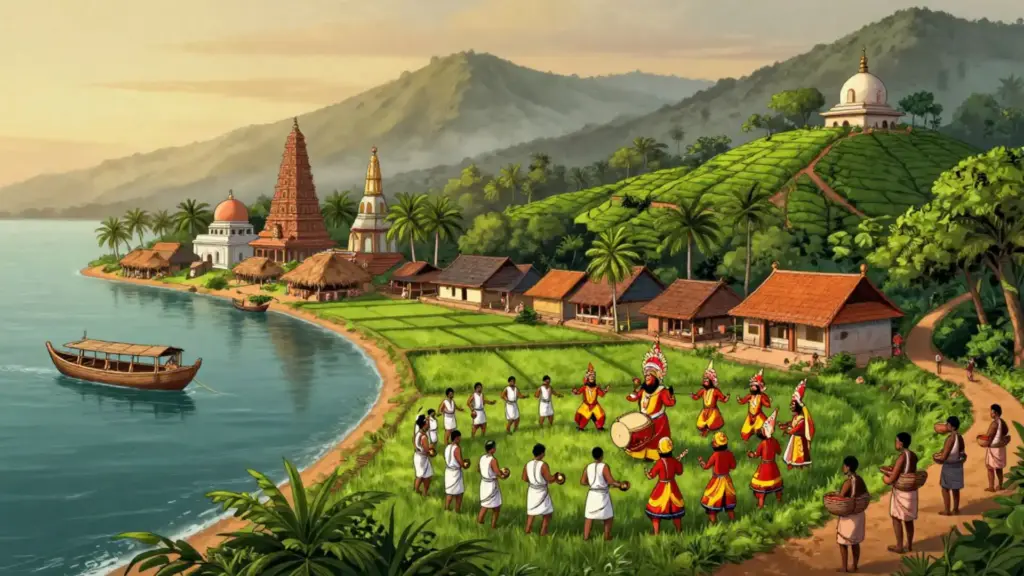
Kerala stretches from the Arabian Sea coast to the Western Ghats, and its cultural life reflects that range of landscapes and communities. Language, faith, local histories and patterns of work all influence which performances flourish and when they are seen. That variety is one reason Kerala art forms and dance cannot be reduced to a single style: a ceremonial performance in the north and a community dance at a family celebration may have quite different purposes. When you learn about the people and place around a performance, its details begin to make sense.
The influence of temples, festivals and royal courts
Temples and seasonal festivals have provided settings for many forms of performance, particularly those tied to worship and ritual. Elsewhere, royal courts helped nurture performance traditions, while community gatherings kept other forms closely connected to everyday social life. These settings influence not only what is performed but also who takes part, how long it lasts and what the audience is expected to understand. You can explore Kerala’s cultural history to see how centuries of exchange and local patronage contributed to the state’s distinctive artistic life.
How performance traditions are passed between generations
Many traditions depend on long periods of learning, close observation and practice with experienced performers. A student may learn how to control a gesture or maintain a rhythm through repetition, while also being taught the stories and conventions that give those skills meaning. Knowledge lives in practice: it is carried in the body, in shared music and in the relationships between teachers, performers and communities. When you watch, remember that what appears effortless may rest on years of discipline and collective care.
Classical dance and theatre
Kerala’s classical stage traditions bring together movement, music, poetry and dramatic storytelling, but each has its own language. Some performances make a character’s emotions visible through a carefully developed vocabulary of expression; others move with a lyrical softness or draw on the long history of Sanskrit theatre. You can enjoy the visual richness as a newcomer and still appreciate more by noticing how each form shapes its story. A little patience helps, especially when the performance unfolds at a measured pace.
Kathakali’s stories, expressive makeup and stylised movement
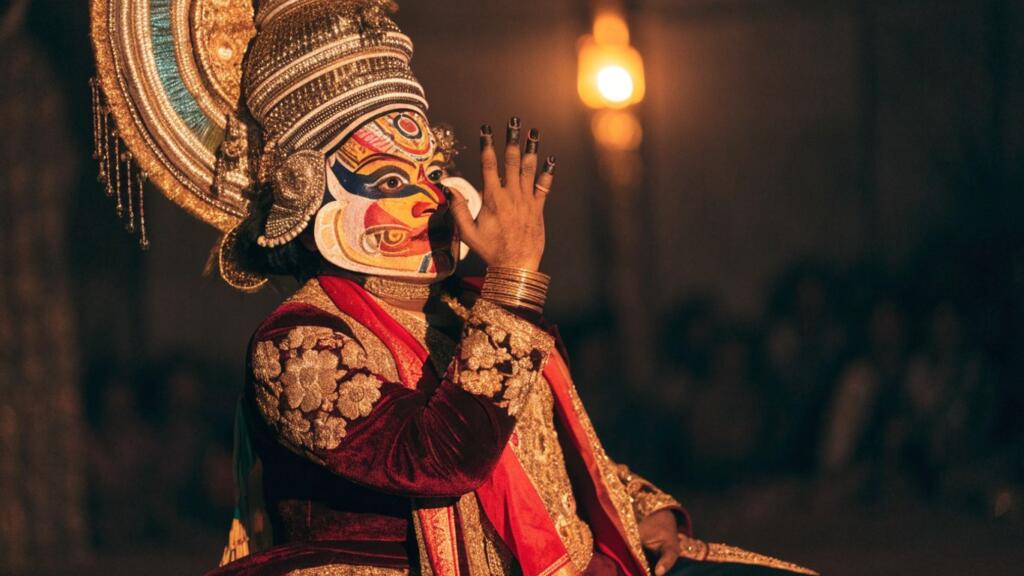
Kathakali is a dance-drama in which performers tell stories through stylised movement, expressive faces and hand gestures. Its striking makeup and elaborate costumes help distinguish characters, while the performer’s controlled posture and gestures give the story its shape. Many narratives draw on Hindu epics and mythological traditions, so you may recognise familiar themes even when you do not know every episode. If you want an introduction to its particular stage language, this guide to Kathakali performance offers useful context.
Mohiniyattam’s graceful movement and lyrical expression
Mohiniyattam is known for flowing movement and a lyrical quality that contrasts with Kathakali’s more sharply defined dramatic gestures. The dancer’s movement can feel measured and continuous, with subtle changes in expression carrying much of the feeling. Music and poetry contribute to that gentle unfolding, so the performance rewards attentive watching rather than a search for constant spectacle. You may find that its quiet control stays with you after the final movement.
Koodiyattam and the tradition of Sanskrit theatre
Koodiyattam is a longstanding form of Sanskrit theatre, performed through a highly developed combination of acting, gesture and expression. Its pace gives performers room to explore a character or moment in detail, and a scene may take time to reveal its layers. The table below offers a simple starting point for distinguishing it from two other classical forms discussed here.
Art form | A useful first point of attention | Performance character |
|---|---|---|
Kathakali | Makeup, gesture and dramatic roles | Stylised dance-drama |
Mohiniyattam | Flowing movement and lyrical expression | Graceful and measured |
Koodiyattam | Acting, gesture and extended scenes | Sanskrit theatre tradition |
These are broad entry points, not strict definitions; individual performances can be richer than a short description suggests. If you watch more than one form, notice how each creates meaning through a different balance of movement, expression and theatrical convention.
Ritual and ceremonial performance
Some of Kerala’s most powerful performances are closely bound to a particular place, ritual calendar or community practice. They may take place around a temple or shrine and be understood by participants as more than entertainment. Their visual force can be compelling, but the setting matters: the audience is entering a living cultural and devotional occasion. Understanding that distinction can help you watch with curiosity and care.
Theyyam’s sacred performances in North Kerala
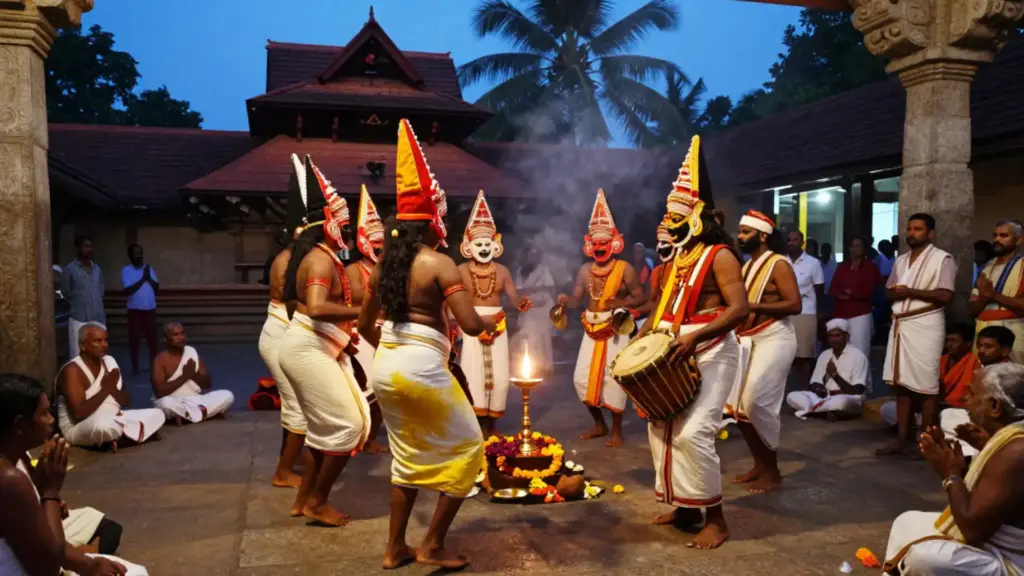
Theyyam is associated especially with North Kerala, where performances take place in local ritual settings. Elaborate costume, face painting and movement combine as a performer takes on a sacred role within the ceremony. For those gathered, the event can carry a significance that is both communal and devotional. If you are present as a visitor, follow local guidance and remember that the performance belongs first to the people and place sustaining it.
Padayani’s masks, rhythm and temple rituals
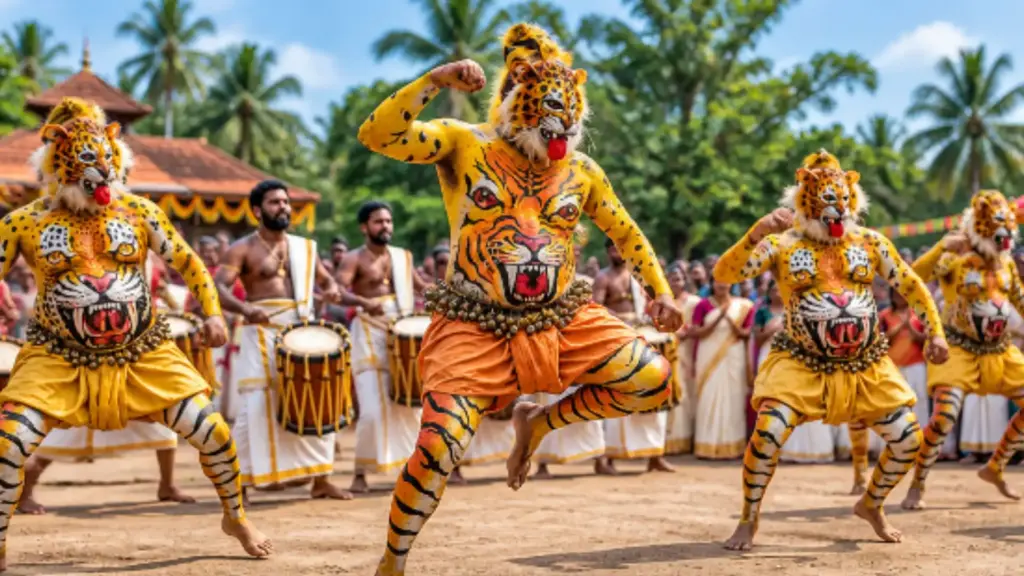
Padayani is a ritual performance tradition associated with temple festivals, with striking masks and rhythmic movement among its recognisable features. The visual forms and sounds contribute to a shared ceremonial atmosphere, rather than functioning as decoration alone. Because the event is rooted in local practice, its timing and details may vary by place. Asking a knowledgeable local person about what you are seeing can offer context without interrupting the occasion.
Thirayattam’s blend of dance, music and worship
Thirayattam brings dance and music into a ritual setting, joining performance with acts of worship. The sounds, costume and movement work together, while the occasion itself gives them their meaning. It is useful to approach it as a community practice rather than as a show arranged only for an audience. That perspective helps you notice the relationship between the performers, the ritual space and those gathered there.
Folk and community dances
Community dances make visible the ways people celebrate, gather and share traditions across generations. They may appear at weddings, festivals or other social occasions, with the group itself shaping the rhythm and atmosphere. Some are performed in a circle; others use songs, coordinated steps or props. When you encounter one, watch how participation and togetherness are as important as individual display.
Thiruvathirakali and the circular dance tradition
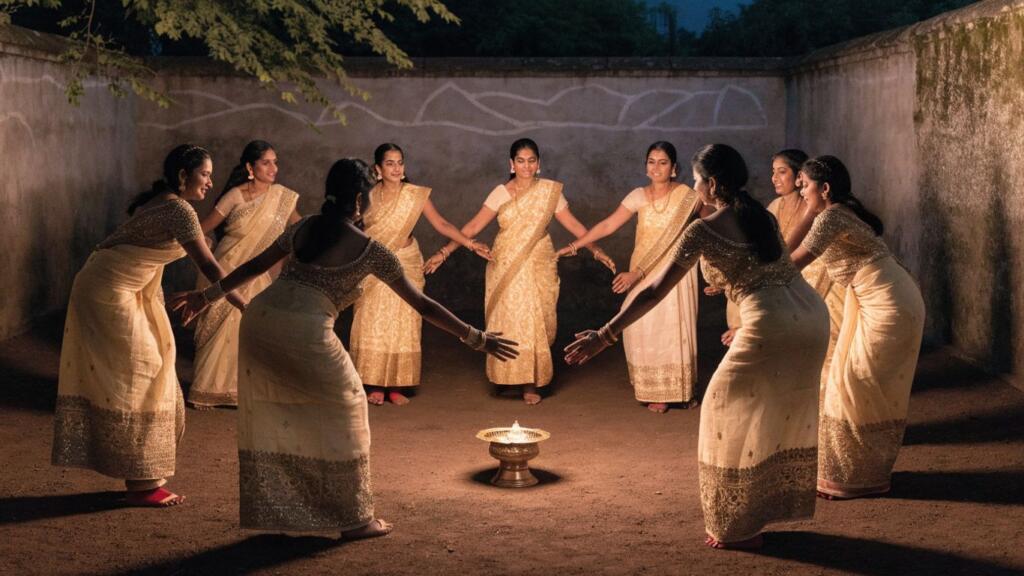
Thiruvathirakali is a group dance traditionally associated with women and performed in a circle. The dancers move in coordinated steps around a central lamp or space, with songs and rhythm guiding the pattern. Its circular arrangement makes the shared movement easy to follow, though the exact form can differ between occasions and groups. You can look for the way the dancers maintain a common pulse while each movement remains light and unforced.
Oppana as a celebration of Kerala’s Mappila culture
Oppana is a celebratory performance associated with Kerala’s Mappila Muslim communities, often seen at wedding festivities. Singing, rhythmic clapping and coordinated movement create a lively setting around the celebration. Its place in a social occasion is part of what makes it meaningful: the performance is woven into a gathering, not detached from it. You can learn more about the communities behind such traditions through an overview of Kerala’s people and traditions.
Margamkali and Kolkali in community gatherings
Margamkali is associated with Kerala’s Christian communities, while Kolkali is a group dance in which performers use sticks to mark rhythm and movement. Both are shaped by group participation, though their music, steps and cultural settings are distinct. If you see either at a gathering, notice how performers coordinate with one another and how the surrounding community responds. These shared occasions help traditions remain present in social life, rather than only in formal performances.
The elements that bring performances to life
A performance communicates through more than its plot or choreography. You may find meaning in a glance, a repeated beat, a costume detail or the way performers arrange themselves in space. These elements work together, and their significance becomes clearer when you give them time. Fabulous Kerala’s cultural storytelling encourages you to look beyond a list of attractions and consider the traditions and people behind them
Gesture, facial expression and storytelling
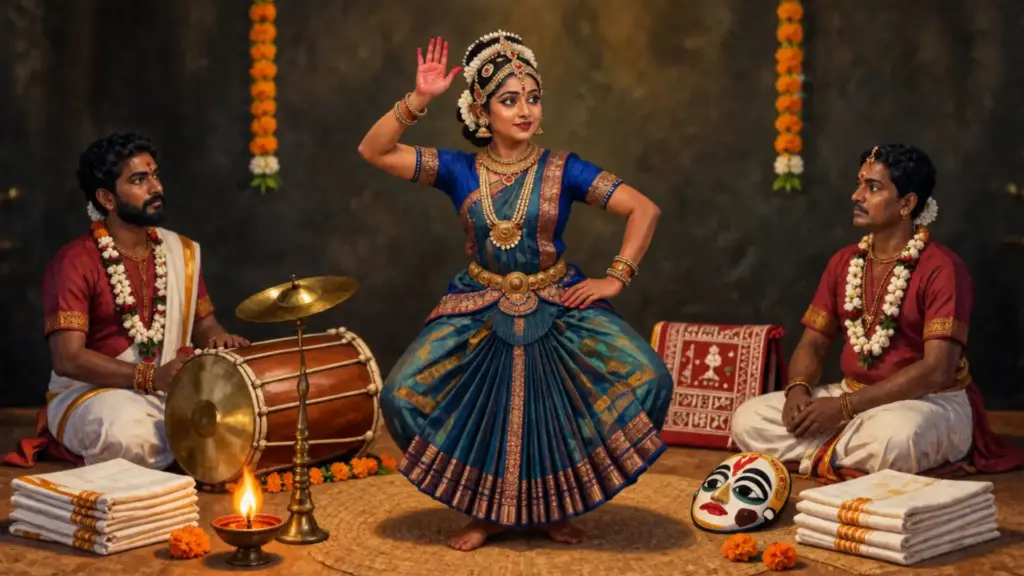
In many performance traditions, gesture and facial expression help tell the story as much as spoken words do. A hand movement can carry a specific meaning, while a shift in the eyes or face may change the emotional tone of a scene. The conventions are not always immediately obvious, so you do not need to understand every sign to appreciate the care behind it. Watching the performer’s face and hands together can help you follow how a moment develops.
Percussion and the role of live music
Live music and percussion give many performances their pulse, helping performers sustain movement and giving a scene its mood. A repeating rhythm can build anticipation; changes in tempo or intensity may signal a shift in the action. As you listen, notice how the musicians and performers respond to each other rather than treating the music as background.
Listening closely can also make slower passages feel more alive: a small rhythmic change may be doing important work. The music is part of the performance’s structure, not simply an accompaniment added around it.
Costumes, masks and makeup as visual storytelling
Costume, masks and makeup help establish a performance’s visual world, and in some forms they also signal character or ritual role. The choices can be vivid, but they are not merely ornamental; they work alongside gesture, music and movement to guide the audience. In a ritual performance, visual elements may carry meanings grounded in local belief and practice. Taking time to notice details can deepen your experience without assuming that every colour or shape has a single, universal interpretation.
Experiencing Kerala’s art forms respectfully
Seeing a performance in its own setting can give you a stronger sense of how it belongs to local life. Some opportunities are organised for visitors, while others take place as part of community or religious occasions. Fabulous Kerala provides practical guidance for people discovering the state, helping you plan with more confidence while approaching its traditions with respect. Before you go, check what kind of event you are attending and whether visitors are welcome.
Where to see performances, from festivals to cultural centres
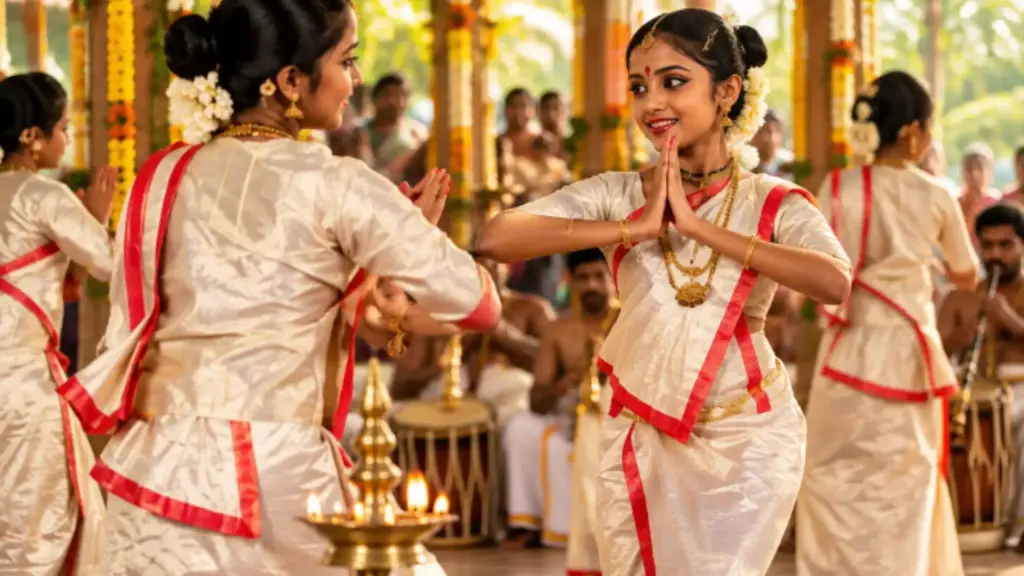
You may encounter performances at festivals, cultural centres and community events, though availability varies by place and season. Cultural centres can be a helpful introduction when you want an explanation of the form as well as a performance; a local festival may offer a closer view of its community setting. If you are planning a wider visit, use a guide to planning a Kerala trip to consider timing, transport and local customs alongside cultural activities. Wherever you go, favour clear information about the event over assumptions based on a short listing.
What to know about timing, setting and audience etiquette
The setting shapes what is appropriate, so take cues from organisers and local attendees. A few simple practices can help you be a considerate audience member:
Check whether photography is permitted before taking pictures.
Arrive with enough time to understand the venue and its rules.
Keep conversations and phone sounds low during the performance.
Follow local instructions about seating, access and ritual spaces.
These small choices help keep attention on the performance and show consideration for the people gathered there. When you are unsure, asking an organiser quietly is better than guessing.
How tourism and cultural preservation shape the future of these traditions
Tourism can introduce more people to Kerala’s art forms, while also creating questions about how performances are presented and who benefits from that attention. Traditions remain strongest when local performers and communities have a meaningful role in deciding how they are shared. As a visitor, you can support that by choosing thoughtfully organised events, listening to context and avoiding demands that interrupt a ritual or community occasion. Fabulous Kerala aims to help readers understand and experience the state through accurate, engaging content, and this same care is valuable when you encounter its living traditions in person.
Conclusion
Kerala’s performance traditions invite you to look, listen and learn: from the disciplined storytelling of classical theatre to ritual performances and dances woven into community life. When you approach each form with curiosity and respect, you see more than a spectacle—you begin to understand the people, places and practices that keep it alive.
Frequently Asked Questions
What are some well-known art forms from Kerala?
Kathakali, Mohiniyattam, Koodiyattam, Theyyam, Padayani, Thiruvathirakali and Oppana are among the traditions you may encounter. Each has its own setting, style and cultural context.
Is Kathakali a dance or a theatre form?
Kathakali is a dance-drama that combines stylised movement, acting, expressive gestures, music and elaborate visual design to tell stories.
What makes Mohiniyattam different from Kathakali?
Mohiniyattam is known for lyrical, flowing movement, while Kathakali is recognised for its dramatic characterisation, stylised gestures and distinctive makeup.
Where is Theyyam performed?
Theyyam is associated particularly with North Kerala and is performed in local ritual settings. Its timing and form depend on the community and occasion.
What is Oppana traditionally associated with?
Oppana is a celebratory performance from Kerala’s Mappila Muslim culture and is often part of wedding festivities, with singing, clapping and group movement.
Can visitors attend ritual performances?
Some ritual events welcome visitors, while others are primarily for the local community. Check with organisers, follow local guidance and respect restrictions on access or photography.
How can you show respect while watching a performance?
Learn about the setting, arrive considerately, keep noise low and follow instructions from organisers or local attendees. Ask before photographing, especially at ritual events.