The History of Kerala
A land shaped by spices, oceans, cultures and centuries of remarkable stories.”
Introduction
Kerala’s history is unlike that of any other region in India.
For more than 3,000 years, this narrow strip of land along India’s south-western coast has connected East and West through trade, culture and ideas. Long before modern shipping routes existed, merchants from Arabia, Egypt, Rome, China and later Europe crossed the Arabian Sea in search of one precious commodity—spices.
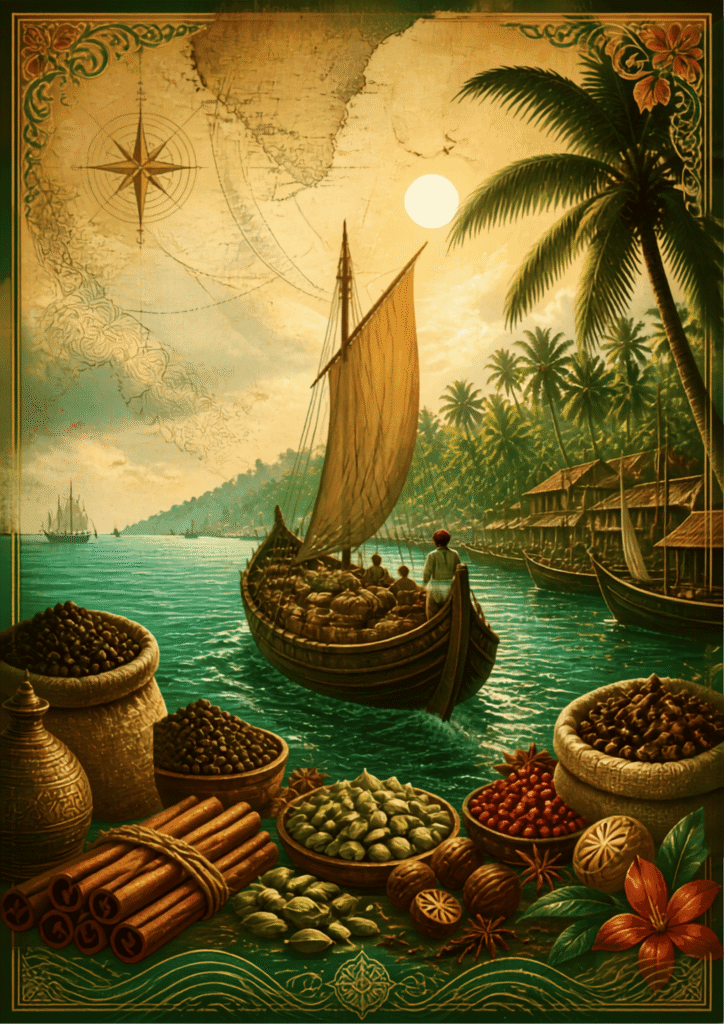
Black pepper, often called “Black Gold,” made Kerala famous across the ancient world. Ships carrying pepper, cardamom, cinnamon and ginger sailed from Kerala’s ports to distant kingdoms, making the region one of the world’s earliest centres of international trade.
Yet Kerala’s story is about much more than commerce.
It is the story of ancient kingdoms, pioneering education, religious harmony, artistic excellence, maritime exploration, social reform and one of the highest standards of living in India today.
Today, visitors can still walk through centuries of history by exploring ancient temples, churches, mosques, synagogues, colonial forts, royal palaces and bustling spice markets that continue to tell Kerala’s remarkable story.
Early Kerala

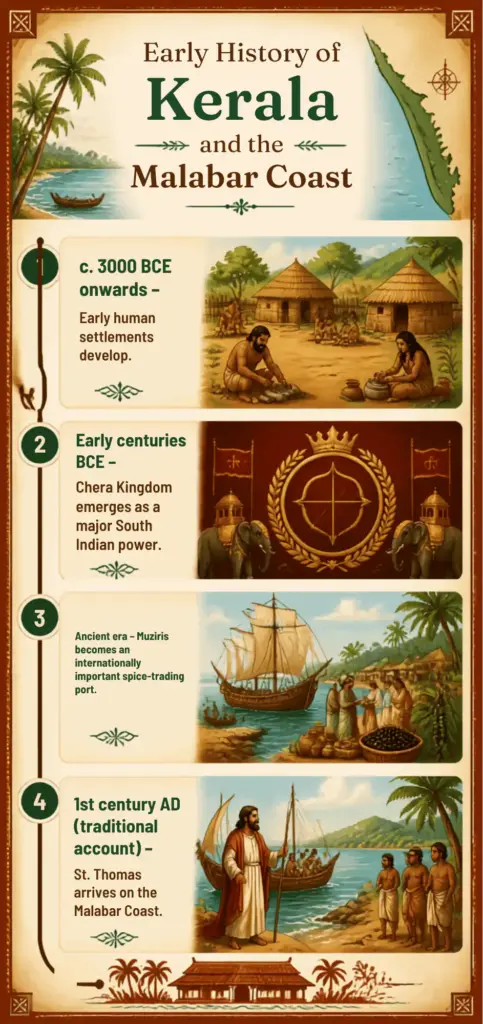
Human settlement in Kerala dates back thousands of years. Archaeological discoveries suggest that people lived in the region during the Neolithic period, with farming communities gradually developing as agriculture became established.
The earliest written references to Kerala appear in ancient Indian literature and Tamil Sangam poetry, which describe a prosperous land known for its fertile soil, elephants, spices and thriving ports.
One of the earliest kingdoms to rule the region was the Chera Kingdom, which emerged around the early centuries BCE and became one of the three great Tamil kingdoms of South India, alongside the Cholas and the Pandyas.
The Cheras controlled much of present-day Kerala and played a central role in maritime trade with the Roman Empire and the Middle East.
Kerala and the Ancient Spice Trade
Few products have shaped world history like spices.
For centuries, Kerala was the world’s leading source of black pepper, earning it the nickname “The Spice Garden of the World.”
Pepper from Kerala was considered so valuable that it was traded almost like currency.
Ancient Roman merchants sailed to Kerala’s ports carrying gold, silver, wine and luxury goods, returning with valuable cargoes of pepper, cinnamon, cardamom and precious stones.
The ancient port of Muziris, believed to have been located near present-day Kodungallur, became one of the busiest trading ports in the ancient world.
Trade also brought ideas.
Arab merchants introduced new cultures and business networks, while Chinese traders exchanged silk, porcelain and technology. Kerala’s famous Chinese fishing nets, still seen in Kochi today, reflect centuries of contact with China.
Faith, Diversity and Cultural Exchange

Kerala has long been recognised for its remarkable religious diversity.
According to long-held Christian tradition, St. Thomas the Apostle arrived on the Malabar Coast in the first century AD and established some of India’s earliest Christian communities. These communities, often known as the Saint Thomas Christians, remain an important part of Kerala’s heritage.
Islam reached Kerala peacefully through Arab traders centuries before many other parts of the Indian subcontinent. Coastal trading towns became centres of commerce and cultural exchange, with mosques established alongside markets and ports.
Kerala is also home to one of the oldest Jewish communities in India. Jewish merchants settled in the region many centuries ago, particularly around Kochi, where the historic Paradesi Synagogue continues to stand as a symbol of this rich heritage.
Alongside these faiths, Hinduism remained deeply rooted in Kerala’s society, influencing literature, architecture, festivals, classical arts and everyday life.
This long history of interaction between different communities helped shape Kerala into one of India’s most culturally diverse states.
The Arrival of European Powers
The late fifteenth century marked a turning point in Kerala’s history.
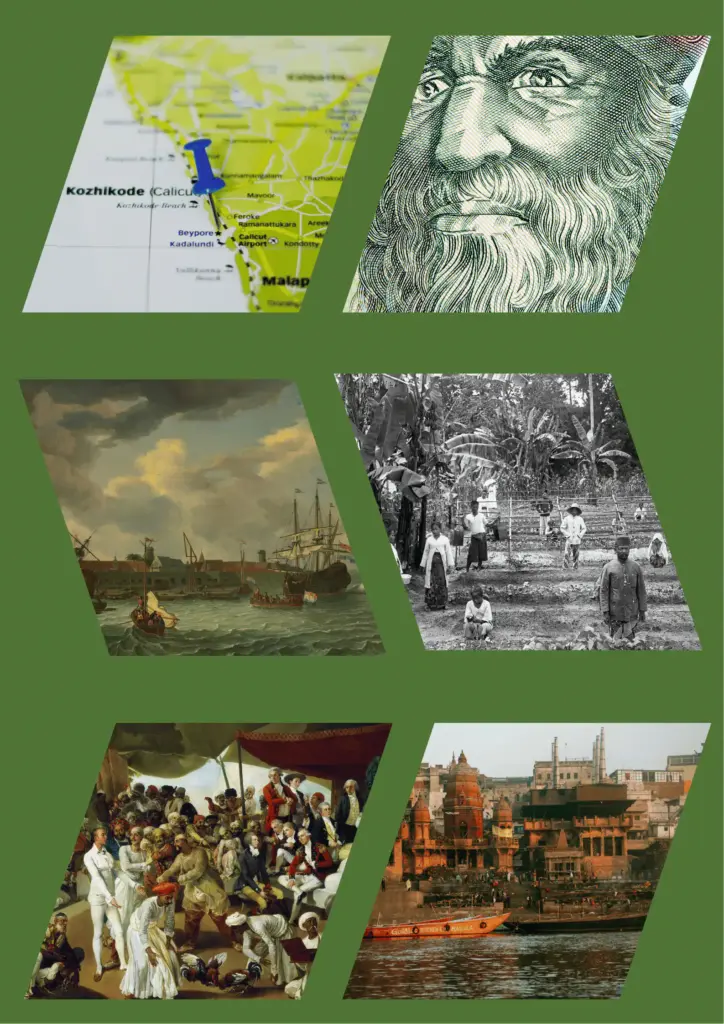
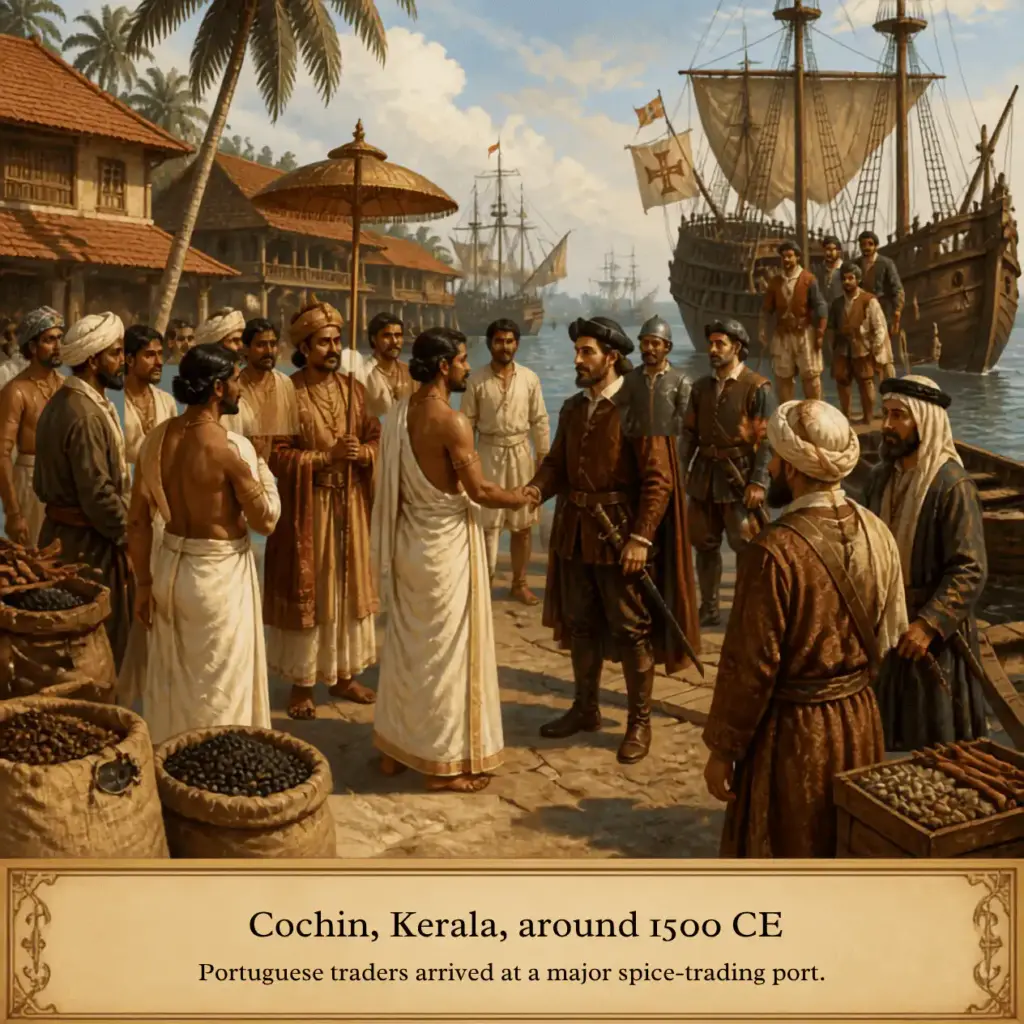
In 1498, the Portuguese explorer Vasco da Gama landed at Kappad near Kozhikode (Calicut), opening a direct sea route between Europe and India.
His arrival transformed global trade and began a new chapter in Kerala’s history.
The Portuguese established forts, churches and trading centres along the coast, seeking control of the lucrative spice trade.
They were later challenged by the Dutch, who gained influence during the seventeenth century, followed by the British, whose political and commercial influence gradually expanded across the region.
These European powers left behind forts, architecture, churches and administrative systems that remain part of Kerala’s historical landscape today.
The Kingdom of Travancore

Among Kerala’s most influential rulers was Marthanda Varma, who transformed the Kingdom of Travancore during the eighteenth century.
Through military reforms, administrative improvements and economic development, Travancore became one of the strongest princely states in India.
The kingdom invested in education, public administration and infrastructure, laying foundations that would later contribute to Kerala’s high literacy and social development.
Social Reform and Education
One of the defining chapters of Kerala’s history is its commitment to social progress.
During the nineteenth and early twentieth centuries, visionary reformers challenged discrimination based on caste and worked to expand access to education.
Leaders such as Sree Narayana Guru, Ayyankali, Chattampi Swamikal, and many others encouraged equality, education and social justice.
Missionary schools, local reform movements and enlightened rulers all contributed to expanding educational opportunities.
These reforms helped shape modern Kerala into one of India’s most literate and socially progressive states.

Independence and the Formation of Kerala

India gained independence from British rule in 1947.
On 1 November 1956, the modern state of Kerala was officially formed by merging the Malayalam-speaking regions of Travancore-Cochin with the Malabar district and Kasaragod.
This historic reorganisation created the Kerala we know today.
Every year, Kerala Piravi (Kerala Formation Day) is celebrated on 1 November to mark this important milestone.
Modern Kerala
Today, Kerala is recognised around the world for its achievements in education, healthcare, literacy and human development.
The state is also one of India’s leading tourism destinations, attracting visitors with its backwaters, hill stations, wildlife, beaches, Ayurveda and rich cultural traditions.
Kerala’s economy has diversified beyond agriculture to include information technology, healthcare, tourism, manufacturing and services. At the same time, millions of Malayalees living overseas continue to contribute to the state’s development through investment, knowledge and cultural ties.

Kerala's Historical Legacy
Kerala’s history cannot be told through a single dynasty, religion or event.
It is the story of people who welcomed traders from distant lands, preserved their traditions while embracing new ideas, and built a society known for learning, resilience and cultural diversity.
From the spice merchants of Muziris to the houseboats of Alappuzha, from the temples of Guruvayur to the streets of Fort Kochi, history is woven into everyday life across Kerala.
To understand Kerala is to understand that its greatest strength has always been its openness—to the sea, to cultures, to commerce and to new ideas.
That spirit continues to shape Kerala today, making it one of India’s most distinctive and admired states.
Timeline of Kerala History
c. 3000 BCE onwards – Early human settlements develop.
Early centuries BCE – Chera Kingdom emerges as a major South Indian power.
Ancient era – Muziris becomes an internationally important spice-trading port.
1st century AD (traditional account) – St. Thomas arrives on the Malabar Coast.
7th–8th centuries – Arab traders strengthen commercial and cultural ties with Kerala.
1498 – Vasco da Gama lands at Kappad, opening the direct sea route from Europe to India.
17th century – Dutch influence grows along the Malabar Coast.
18th century – Marthanda Varma strengthens the Kingdom of Travancore.
19th–20th centuries – Major social reform and educational movements transform Kerala.
1947 – India gains independence.
1 November 1956 – The modern state of Kerala is officially formed.
Today – Kerala is recognised globally for its literacy, healthcare, tourism and cultural heritage.