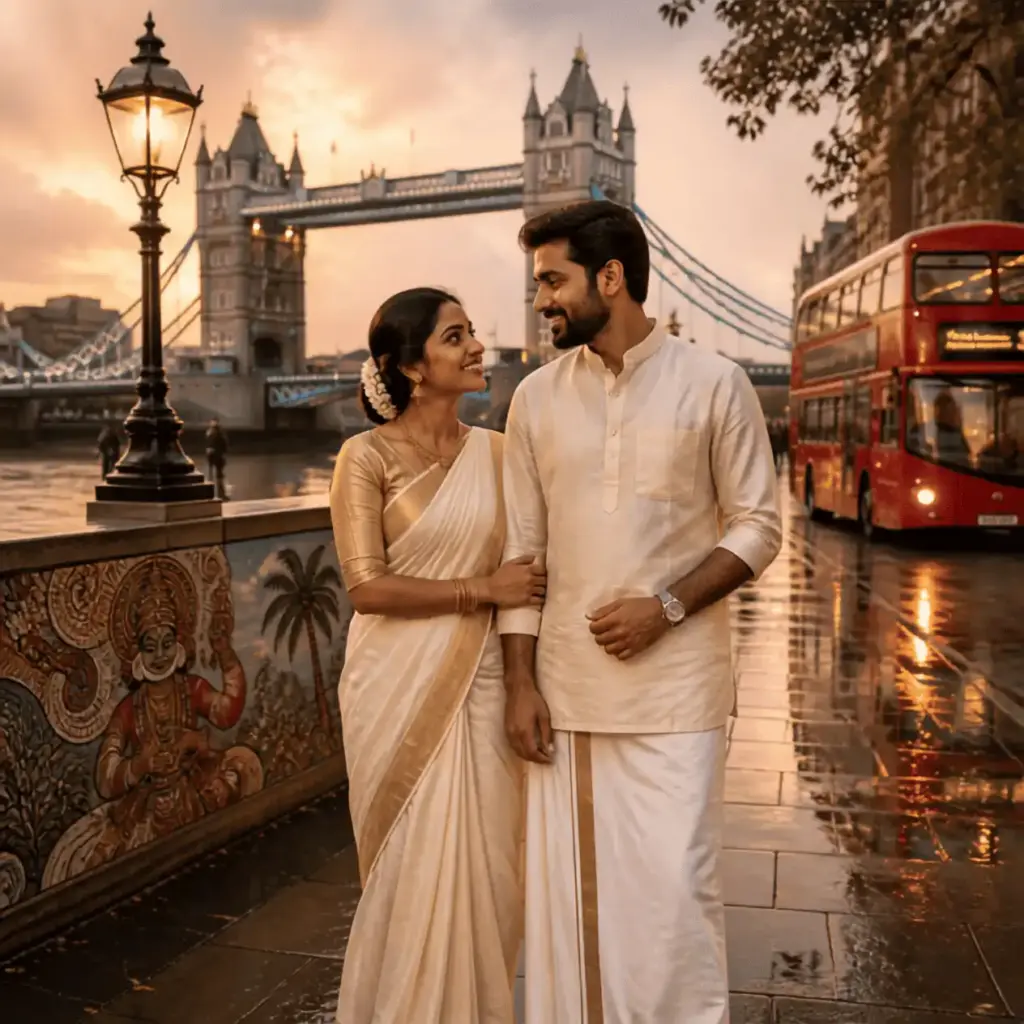
Meet the Malayalees—the people whose resilience, curiosity, diversity and connection to home have helped shape one of India’s most distinctive states.
The People Behind the Place
Kerala may be famous for its backwaters, coconut palms, spices and monsoon landscapes, but the true character of Kerala is found in its people.
Known broadly as Malayalees, the people of Kerala share a connection with the Malayalam language and a cultural heritage shaped by centuries of migration, trade, religion, education and social change.
But there is no single way to describe a Malayalee.
Kerala is home to Hindus, Muslims, Christians and smaller religious communities; farmers and fishermen; entrepreneurs and artists; scientists and teachers; craftspeople and technology professionals; coastal communities and mountain communities; people who have lived in Kerala for generations and others whose families have travelled across the world.
This diversity is central to Kerala’s identity.
To discover Kerala, therefore, is not simply to explore its landscapes.
It is to meet its people.
WHO ARE THE MALAYALEES?
The term Malayalee, or Malayali, generally refers to people associated with Kerala and the Malayalam language.
Malayalam is spoken throughout Kerala and by Malayalee communities across India and around the world.
Language provides an important cultural connection, but Malayalee identity extends far beyond language.
Food, literature, cinema, music, festivals, humour, family traditions and a strong connection to Kerala all contribute to a shared cultural identity.
A Malayalee living in Kochi may have a very different life from someone living in Wayanad.
A fishing family in Alappuzha may experience Kerala differently from a technology professional in Thiruvananthapuram.
A Malayalee raised in London, Dubai or Toronto may speak Malayalam differently—or perhaps very little—but still feel deeply connected to Kerala.
That ability to maintain a sense of belonging across borders is one of the fascinating characteristics of Kerala’s people.
A Diverse Society
Kerala’s population reflects centuries of cultural exchange.
For thousands of years, Kerala’s location on the Arabian Sea brought traders, travellers and religious communities from distant parts of the world to its shores.
Hindu traditions have deep roots in the region.
Ancient Christian communities developed along the Malabar Coast.
Arab traders helped establish some of India’s earliest Muslim communities.
Jewish communities lived and traded in Kerala for centuries.
European powers later brought Portuguese, Dutch and British influences.
These encounters left their mark on Kerala’s architecture, cuisine, language, customs and society.
The result is not one single Kerala culture but many traditions existing alongside one another.

The Malayalam Language
One of the strongest bonds connecting Malayalees is Malayalam.
It is the official language of Kerala and one of India’s classical languages.
Malayalam has a rich literary tradition encompassing poetry, novels, journalism, theatre, cinema and philosophical writing.
The language itself reflects Kerala’s long history of cultural interaction, developing from the Dravidian linguistic tradition while absorbing vocabulary and influences from Sanskrit and, through centuries of contact, languages including Arabic, Portuguese and English.
For Malayalees living overseas, Malayalam often becomes an important connection to home.
A familiar Malayalam phrase heard thousands of kilometres from Kerala can instantly create a sense of belonging.
Education and the Malayalee Identity
Education occupies a particularly important place in modern Kerala society.
Kerala consistently records one of India’s highest literacy rates, reflecting generations of investment in schooling and social development.
This achievement did not happen overnight.
Royal patronage, social reform movements, religious organisations, missionary institutions, community initiatives and later government programmes all contributed to widening access to education.
Over time, education became deeply associated with social mobility.
Families frequently made significant sacrifices to educate their children, viewing learning as a pathway towards greater opportunity.
This emphasis helped produce generations of teachers, doctors, nurses, engineers, scientists, administrators, entrepreneurs and professionals who went on to work across India and around the world.


The Spirit of Social Reform
Modern Kerala was shaped by extraordinary social reform movements.
During the nineteenth and twentieth centuries, reformers challenged deeply entrenched inequalities and argued for greater access to education, dignity and opportunity.
Figures such as Sree Narayana Guru, Ayyankali, Chattampi Swamikal, Vakkom Moulavi and many others contributed to movements that transformed Kerala society.
Different communities established schools, organisations and institutions designed to improve education and social participation.
These struggles were complex and took place over generations.
Their legacy helped create a society in which education, public debate and social participation became increasingly important.
Women in Kerala
Women have played a central role in Kerala’s social and cultural development.
Historically, some communities in Kerala followed matrilineal systems in which family identity and property could pass through the female line.
Kerala’s expansion of female education also contributed significantly to improvements in literacy, healthcare and social development.
Today, Malayalee women work across virtually every field—from agriculture and education to medicine, science, business, technology, government, sport and the arts.
Women from Kerala have also become an important part of the global workforce, particularly in professions such as healthcare and education.
As elsewhere, challenges around equality and opportunity remain, but women’s contribution to Kerala’s development is impossible to separate from the state’s wider story.


Family and Community
Family continues to occupy an important place in Kerala society.
Extended families have traditionally played significant roles in everyday life, particularly during weddings, festivals, religious celebrations and major family events.
Even when relatives live thousands of kilometres apart, connections with home often remain strong.
Technology has transformed how those relationships are maintained.
A family may now have members living in Kerala, London, Dubai, Melbourne and Toronto while communicating almost every day.
Community organisations, places of worship, cultural associations and local clubs also remain important gathering points both within Kerala and among the diaspora.
Hospitality
Visitors to Kerala frequently encounter a strong tradition of hospitality.
Offering guests tea, coffee or food is common in many homes.
Food itself often becomes a language of welcome.
A guest may arrive expecting a short conversation and find themselves encouraged to stay for lunch.
During festivals and family occasions, meals bring people together across generations.
Hospitality differs between families and communities, of course, but the idea of treating guests generously remains an important part of Kerala’s social culture.


Food and Identity
Ask a group of Malayalees about the best Kerala food and you may quickly start an argument.
That is part of the fun.
Kerala’s cuisine changes considerably from region to region and community to community.
Northern Malabar has its own distinctive dishes and culinary traditions.
Central Kerala has another.
Travancore has another.
Christian, Muslim and Hindu communities have developed distinctive festive foods alongside dishes shared across communities.
Rice, coconut, seafood and spices connect many of these traditions, but the variations are enormous.
For Malayalees living abroad, food often becomes one of the strongest connections to home.
The smell of curry leaves frying in coconut oil, freshly prepared appam, fish curry or banana chips can bring back memories immediately.
Food does more than feed people.
It carries memory.
Festivals Bring People Together
Kerala’s calendar is filled with festivals.
Onam occupies a particularly important place in the cultural imagination of Kerala and is celebrated by Malayalees of different backgrounds.
Vishu, Eid, Christmas, Easter, temple festivals, church feasts and numerous local celebrations add colour to the year.
Festivals bring together food, clothing, music, faith, family and community.
They also provide an opportunity for Malayalees living overseas to reconnect with Kerala.
An Onam celebration in London, Dubai or New York may be thousands of kilometres from Kerala, but the pookalam, sadya and traditional clothing immediately create a connection with home.


The Malayalee and the Wider World
Perhaps no discussion about Kerala’s people is complete without talking about migration.
Malayalees have travelled for centuries.
Kerala’s ancient ports connected its people with Arabia, Africa, China and Europe long before modern globalisation.
In more recent history, migration expanded dramatically.
From the twentieth century onwards, large numbers of Malayalees travelled to other parts of India and overseas in search of education and employment.
The Gulf states became particularly important destinations.
The growth of economies in the United Arab Emirates, Saudi Arabia, Oman, Qatar, Kuwait and Bahrain created opportunities for hundreds of thousands of workers from Kerala.
Malayalees also established communities in Britain, North America, Australia, Europe, Africa and elsewhere.
The Kerala Diaspora
Today, the global Malayalee diaspora is an important part of Kerala’s story.
Doctors, nurses, engineers, teachers, entrepreneurs, academics, tradespeople and professionals of Kerala origin can be found across the world.
Their connection with Kerala has had enormous social and economic effects.
Money sent home by overseas workers has supported families, education, housing and businesses.
Returning migrants have brought new ideas, experiences and expectations.
International migration has also influenced Kerala’s architecture, consumption, cuisine and aspirations.
Walk through many towns and villages and you can see signs of this global connection everywhere.
Kerala may occupy a relatively small corner of India.
But Malayalees are global.

Entrepreneurship and Enterprise
Malayalees have a long tradition of commerce.
This is perhaps unsurprising for a society whose coastline participated in international trade for thousands of years.
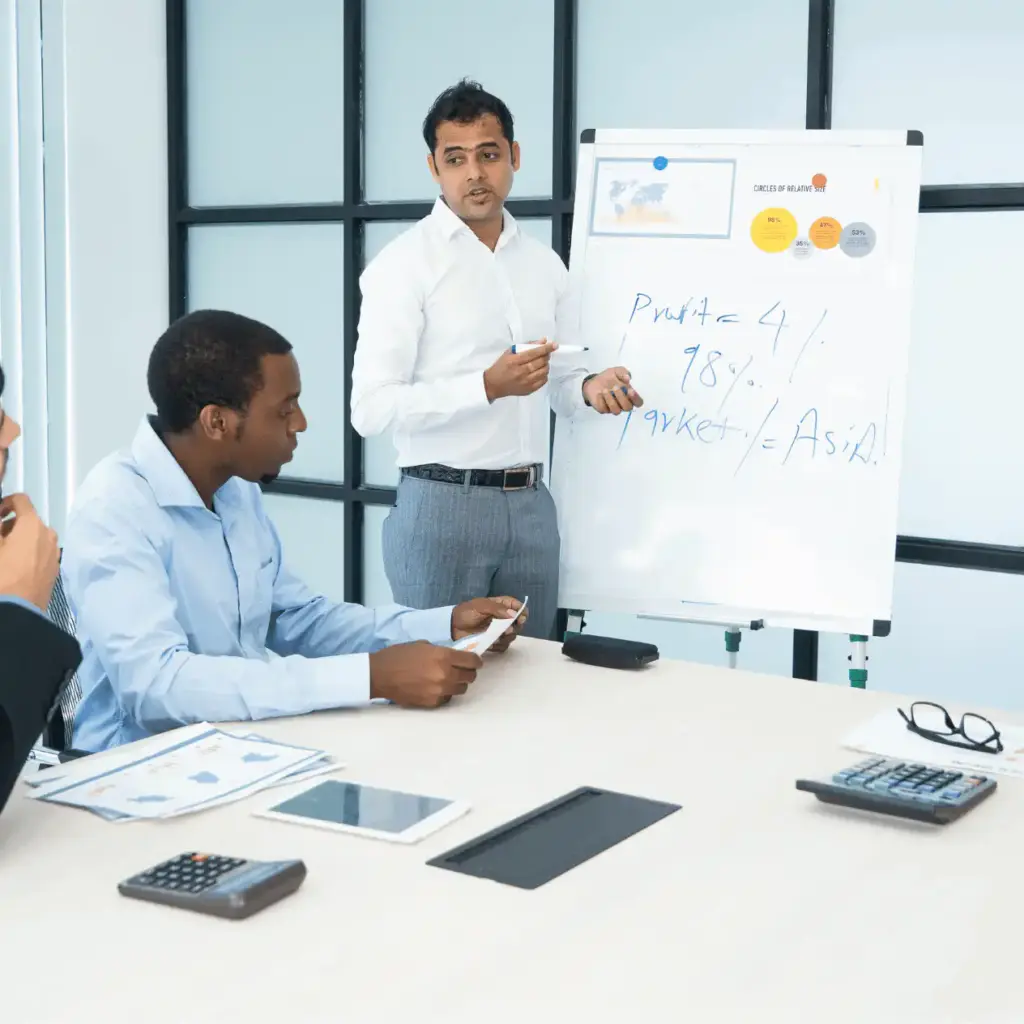
Today, Malayalee entrepreneurs operate businesses ranging from small family enterprises to international companies.
Kerala itself has developed growing sectors in tourism, healthcare, technology, food production, financial services and creative industries.
Kochi and Thiruvananthapuram have become important centres for technology and entrepreneurship, while smaller businesses remain the backbone of communities throughout the state.
The Malayalee entrepreneurial story also extends across the Gulf, Britain, North America and other parts of the world.
Politics and Public Debate
Kerala has a strong culture of political awareness and public discussion.
Newspapers, television, literature, trade unions, political movements and community organisations have historically played significant roles in public life.
Politics is frequently discussed with enthusiasm—in homes, tea shops, workplaces and public spaces.
People may strongly disagree with one another, but the willingness to debate public issues reflects Kerala’s long tradition of literacy, political participation and social activism.

Literature, Cinema and Creativity
Malayalees have a deep appreciation for storytelling.
Kerala has produced celebrated poets, novelists, playwrights, filmmakers, musicians and artists.
Malayalam literature has explored subjects ranging from village life and family relationships to politics, migration and social change.
Malayalam cinema has also earned recognition far beyond Kerala for its storytelling, performances and willingness to explore complex subjects.
Film occupies an important place in everyday conversation.
Actors, directors, stories and songs often become part of popular culture across generations.
Creativity is one of the many ways Malayalees interpret and preserve their changing world.
Sport and Kerala
Sport is another important part of Kerala life.
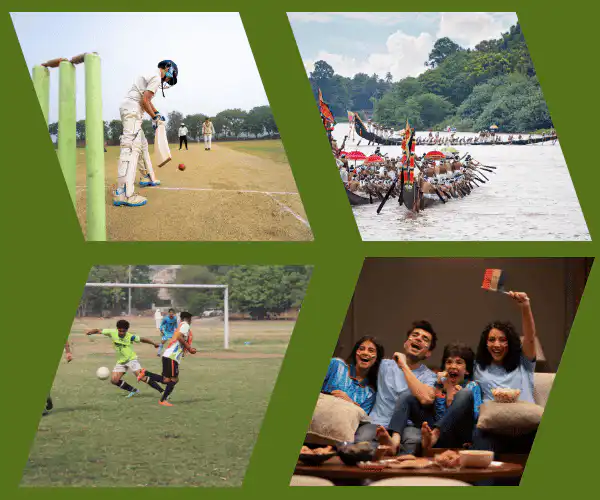
Football has an especially passionate following in many parts of the state, particularly in northern Kerala.
During major international tournaments, towns and villages can be transformed by enormous banners supporting teams such as Brazil and Argentina.
Cricket also enjoys widespread popularity.
Kerala has produced successful athletes in track and field and other sports, with figures such as P. T. Usha becoming nationally recognised sporting icons.
Local football grounds, school competitions and community tournaments continue to make sport part of everyday life.

A People Connected to the Land
Despite urbanisation and global migration, Kerala’s people remain closely connected to the landscape.
Farmers cultivate rubber, coconut, rice, spices, tea and coffee.
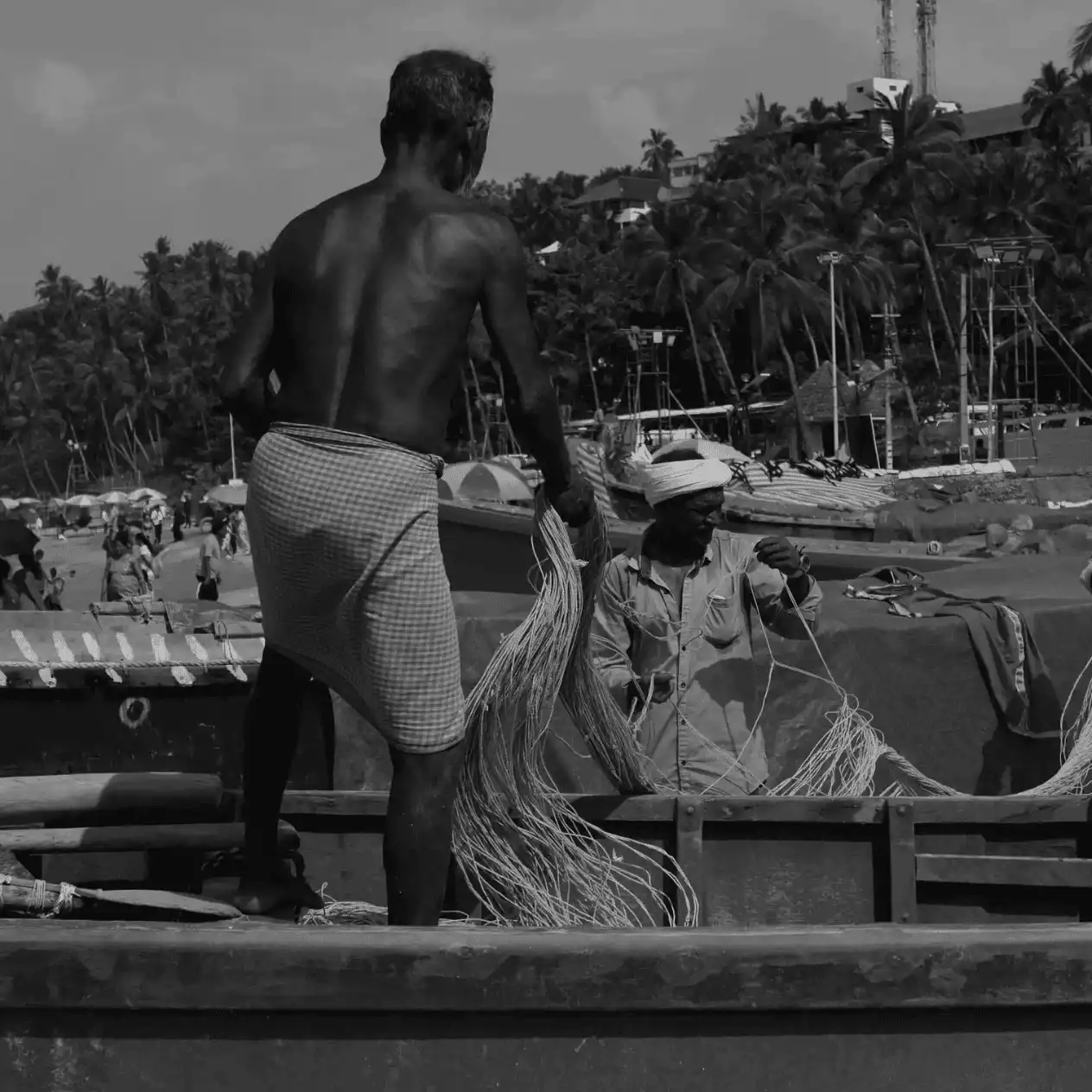
Fishing communities depend on the Arabian Sea and inland waterways.
Forest communities maintain relationships with the Western Ghats.
Generations have adapted their livelihoods to Kerala’s monsoon climate, rivers, coast and mountains.
This connection between people and landscape is one of the reasons Kerala’s geography and culture cannot easily be separated.
Indigenous Communities of Kerala
Kerala is also home to numerous Adivasi, or Indigenous, communities, particularly in areas such as Wayanad, Idukki, Palakkad and parts of the Western Ghats.
These communities have distinct languages, customs, traditions and relationships with the land.
Their histories form an important part of Kerala’s story but have not always received the attention they deserve.
Understanding Kerala fully means listening to these communities and recognising their contributions as well as the social and economic challenges many continue to face.
Fabulous Kerala believes their stories should be represented respectfully and, wherever possible, told with the participation and voices of the communities themselves.


Kerala’s Changing Generations
Kerala continues to change.
Young Malayalees today are growing up in a world very different from that of their grandparents.
Smartphones, international travel, social media, technology and global culture have changed how people work, communicate and think.
Many young people study or work outside Kerala.
Others are building startups, pursuing creative careers or returning home after years abroad.
Traditional expectations are being questioned and reinterpreted.
Yet connections with family, food, language, festivals and home frequently remain remarkably strong.
Kerala’s identity is therefore not frozen in the past.
It continues to evolve with every generation.
The Tenacity of the Malayalee
One quality repeatedly visible throughout Kerala’s history is resilience.
Kerala’s people have adapted to changing economies, migration, monsoons, natural disasters, social transformation and globalisation.
Families have travelled thousands of kilometres in search of opportunity.
Communities have invested heavily in education.
Workers have built new lives overseas while supporting families at home.
Entrepreneurs have established businesses around the world.
This determination to adapt, learn and move forward is an important part of the modern Malayalee story.

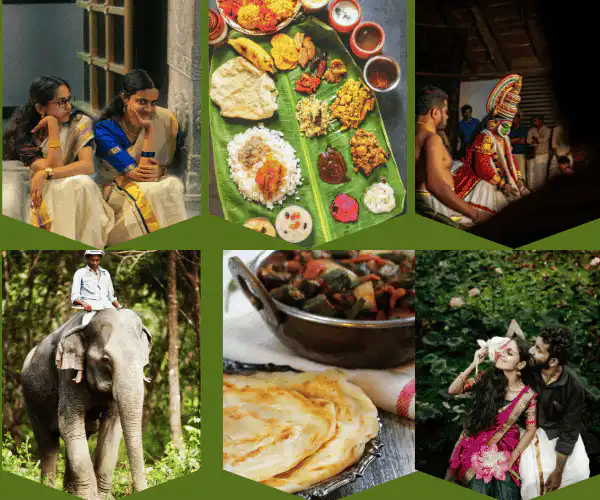
What Does It Mean to Be a Malayalee?
There is no single answer.
For one person, it may mean speaking Malayalam every day.
For another, it may be celebrating Onam with family.
For someone living overseas, it may be the food they cook, the music they listen to or the place they still call home.
For another, it may simply be memories of monsoon rain falling on a tiled roof.
Malayalee identity crosses religions, regions, generations and national borders.
It can be traditional and modern.
Local and global.
Deeply rooted and constantly changing.
Perhaps that is precisely what makes Kerala’s people so fascinating.
The People Are Kerala
Kerala’s landscapes are beautiful.
Its backwaters are famous.
Its food is celebrated.
Its history stretches back thousands of years.
But none of these things alone explains Kerala.
Ultimately, Kerala is its people.
The fishermen heading into the Arabian Sea before sunrise.
The farmer tending pepper vines in the hills.
The teacher opening a classroom.
The nurse caring for a patient thousands of kilometres from home.
The entrepreneur building a new company.
The grandmother passing a recipe to another generation.
The young Malayalee discovering the world while remaining connected to Kerala.
Together, millions of individual stories form something much larger.
They form the story of Kerala.
And wherever Malayalees travel, a little piece of Kerala travels with them.


People of Kerala – Quick Facts
Common name: Malayalee / Malayali
Primary language: Malayalam
Major faith traditions: Hinduism, Islam and Christianity, alongside smaller religious communities
Cultural identity: Diverse, multilingual in practice, locally rooted and globally connected
Major diaspora regions: Gulf countries, other parts of India, Europe, North America, Australia etc.
Known strengths: Education, healthcare, entrepreneurship, literature, arts, migration networks and strong community connections
Did You Know?
Kerala’s story extends far beyond its geographical borders.
Large Malayalee communities celebrate Kerala’s culture around the world—from Onam festivals in the Gulf to community gatherings in Britain, North America and Australia.
For many members of the diaspora, Kerala is simultaneously a physical place and an emotional idea of home.
That may be one of the most remarkable things about Kerala’s people:
They can leave Kerala, but Kerala definitely lives with them!