Kerala cuisine tours: how to choose the right food journey?
Table of Contents:
- Key Takeaways
- What to expect from a Kerala cuisine tour
- How food, history and local life come together?
- The difference between a guided tour and a cooking class
- Typical tour lengths and group sizes
- Who these experiences suit?
- Where to explore Kerala’s food culture?
- Street-food walks in Kochi
- Backwater meals and markets in Alappuzha
- Spice and tea experiences in the hill country
- Regional flavours across Malabar and Travancore
- Dishes and ingredients to look out for
- Kerala staples such as appam, puttu and rice
- Seafood, coconut and traditional curries
- Spices, banana leaves and local produce
- Vegetarian and plant-based specialities
- How to choose a tour?
- Compare itineraries, guides and group sizes
- Check what meals, tastings and transport include
- Find experiences that match your interests
- Assess reviews and responsible-tourism practices
- Planning your food journey
- Choosing the best season and time of day
- Allowing time for markets, meals and travel
- Preparing for spice levels and dietary needs
- Knowing local dining customs and etiquette
- Making the most of each experience
- Ask guides about ingredients and cooking methods
- Visit markets with curiosity and respect
- Keep notes on dishes and regional differences
- Support local cooks, producers and businesses
- Conclusion
- Frequently Asked Questions
- What is a Kerala cuisine tour?
- Are Kerala food tours suitable for vegetarians?
- Can you join a food tour if you do not eat spicy food?
- Is a cooking class the same as a food tour?
- How long should you allow for a food tour?
- What should you ask before booking a Kerala food tour?
- What dishes might you encounter on a Kerala food journey?
Key Takeaways
A well-chosen food journey can help you understand Kerala through its kitchens, markets and regional traditions. Use these points to shape an experience that suits your pace and appetite.
Choose between a guided food walk, a cooking class or a mix of both.
Match the route to the flavours and settings that interest you, from Kochi streets to hill-country tea areas.
Ask what tastings, meals, transport and group size are included before booking.
Share dietary needs and preferred spice levels in advance.
Leave room to talk with cooks and market sellers, and to enjoy a meal without rushing.
What to expect from a Kerala cuisine tour?
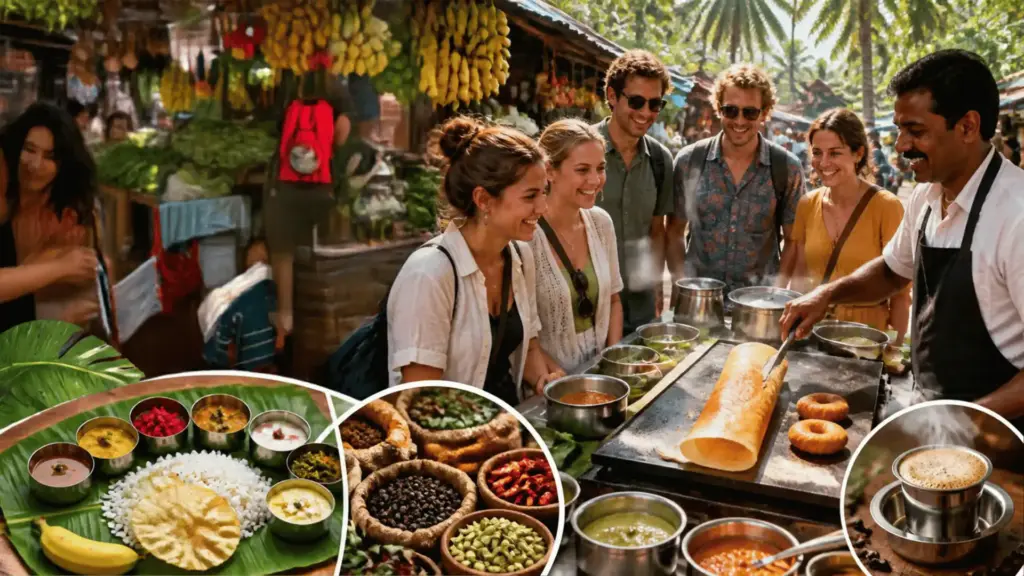
Kerala cuisine tours can be as informal as a stroll between local eateries or as hands-on as a cooking session in a home kitchen. You may taste a few small dishes, share a full meal or spend time learning how ingredients are prepared. The best fit depends on whether you want a broad introduction, a closer look at cooking, or simply a relaxed way to eat well.
How food, history and local life come together?
Food here reflects both place and exchange: coastal catches, crops from the hills and ingredients brought through long-standing trade routes all appear in different forms. A guide can help you notice how community traditions and everyday routines shape what is cooked and when. For wider context on those influences, explore this regional cuisine guide, which covers dishes and food traditions across Kerala.
The difference between a guided tour and a cooking class
A guided tour usually takes you out to sample food and hear about the places and people connected to it. A cooking class puts more attention on the process: preparing ingredients, following a recipe and understanding how flavours are built. Some experiences combine the two, but check the itinerary rather than assuming a tasting walk includes hands-on cooking.
Typical tour lengths and group sizes
A short walk can fit neatly into a morning or evening, while a market visit followed by a meal may need several hours. Group size also changes the feel: a smaller group can make it easier to ask questions and pause at busy stalls, while a larger one may suit you if you prefer a sociable outing. Confirm the expected duration and maximum group size before you commit.
Who these experiences suit?
Food tours can work well for first-time visitors who want an easy introduction, as well as for returning travellers curious about regional differences. They may also suit families, provided the pace and food choices are a good match for younger diners. If you have limited time, pick one neighbourhood or theme rather than trying to cover every part of Kerala in a single outing.
Where to explore Kerala’s food culture?
The setting changes what you notice: a city walk brings you close to snack stalls and old neighbourhoods, while the backwaters and hill country offer a different pace. You can choose one base or let food experiences follow a wider route through the state. Think about how much travel you want to do between meals, not just which dishes you hope to taste.
Street-food walks in Kochi
In Kochi, a food walk can bring together everyday snacks, local cafés and the layered history of a port city. Fort Kochi and nearby neighbourhoods make a useful starting point, though the specific stops depend on the guide and day. Go with an open mind: an unassuming stall or familiar-looking breakfast dish may become the detail you remember most
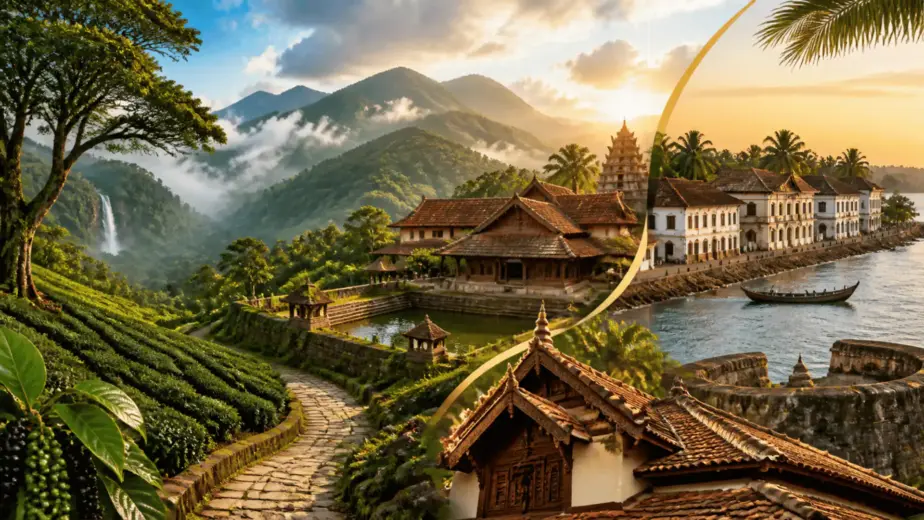
A Kerala culinary journey can also give you a sense of how historic Kochi, spice-growing areas and backwater landscapes might fit into a wider food-focused trip. Use that kind of itinerary as inspiration, then check the current route and inclusions before booking anything similar.
Backwater meals and markets in Alappuzha
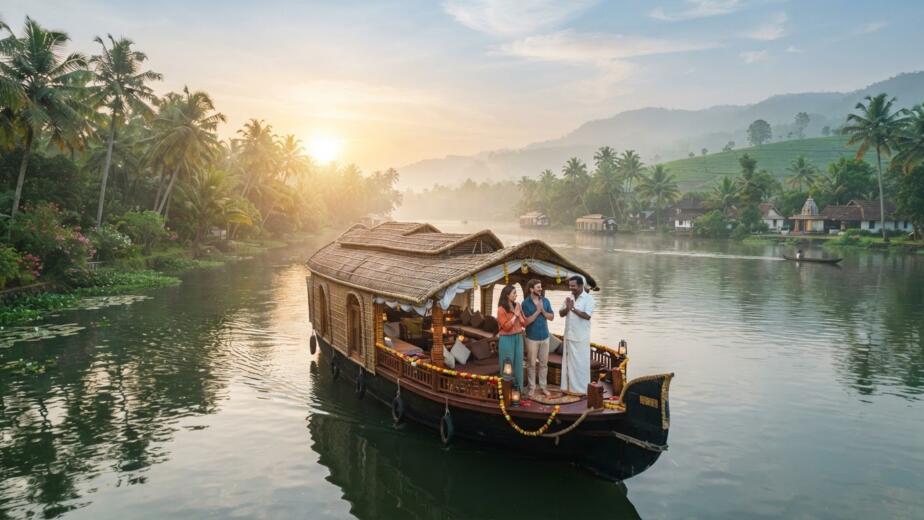
In Alappuzha, you can pair a market visit with a meal or make food one part of a longer backwater day. The experience may feel slower than a city walk, with more time to look at produce and enjoy a meal in its setting. Ask where the food is prepared and how long the outing spends travelling, especially if you want the meal itself to be the focus.
Spice and tea experiences in the hill country
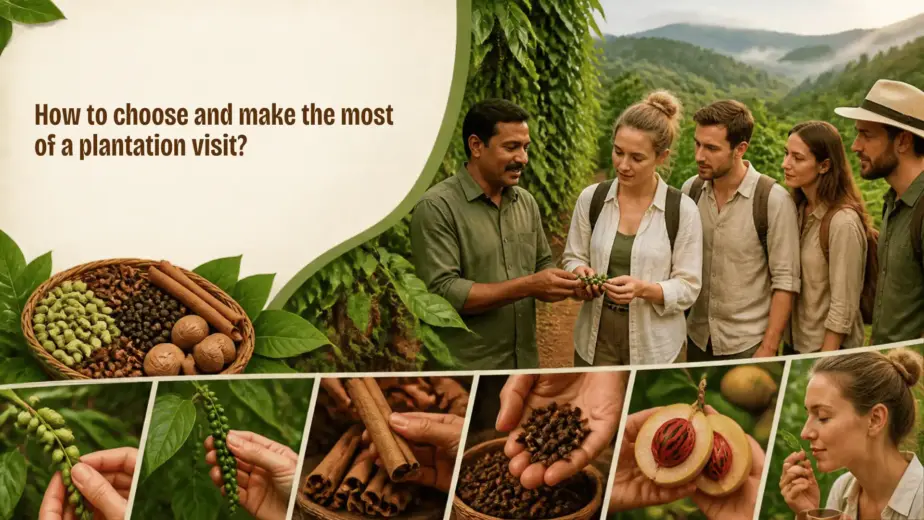
Hill-country experiences can connect a meal with the landscapes where tea and spices are grown. A visit might include a plantation or a local stop, but the details vary, so find out whether tasting, transport or a guided walk is actually part of the plan. For a broader route that includes these landscapes, Fabulous Kerala presents travel experiences across the state.
Regional flavours across Malabar and Travancore
Kerala’s food is not one fixed menu: recipes and meal traditions vary by region and community. The table below offers a few broad signposts rather than a promise of what every tour will serve.
Area or tradition | Flavours and dishes you may encounter | A useful question to ask |
|---|---|---|
Malabar | Biryani and dishes shaped by regional Muslim food traditions | Which local style will we taste? |
Coastal areas | Seafood, coconut and fresh, seasonal ingredients | Is seafood included in the meal? |
Travancore | Vegetarian meals and dishes served as part of a sadya | Will there be a full meal or small tastings? |
Hill country | Tea and dishes using locally available produce | Does the visit include a tasting? |
These are starting points, not strict boundaries: menus shift with the cook, season and occasion. If one style of food matters to you, ask the organiser to name likely dishes rather than relying on a general regional label.
Dishes and ingredients to look out for
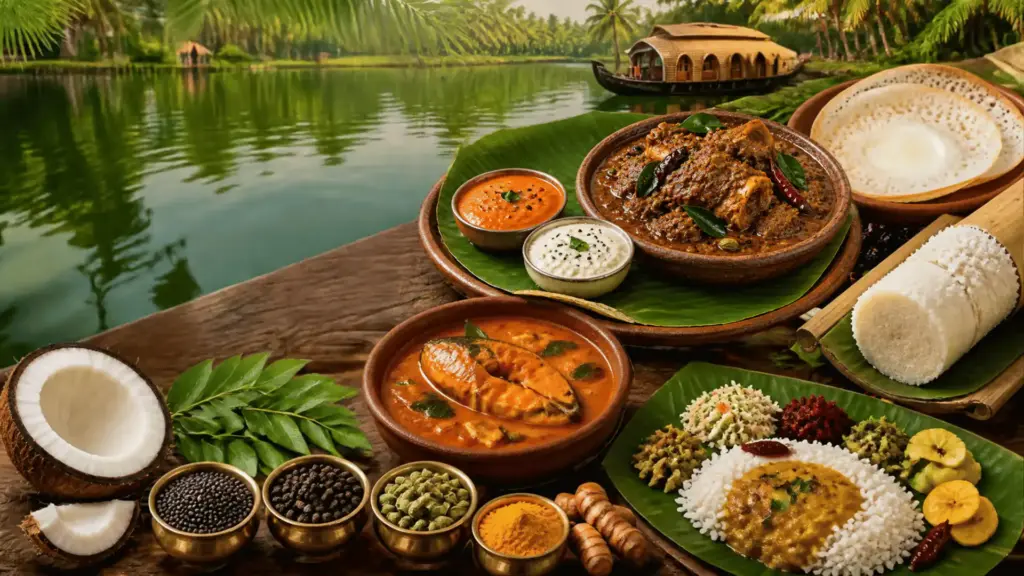
A food journey is more rewarding when you recognise a few staples, but you do not need to arrive knowing every dish. Notice how the same ingredient can be used differently across a meal, and ask what is local or seasonal. Fabulous Kerala celebrates Kerala’s food and traditions; its cuisine guide is a helpful place to browse some of the state’s signature dishes before you travel.
Kerala staples such as appam, puttu and rice
Appam, with its soft centre and lacy edge, is often served alongside a stew, while puttu is a steamed dish commonly paired with curry. Rice is central to many meals, from everyday plates to festive spreads. If you see a dish with an unfamiliar name, ask how it is eaten and what usually accompanies it; that often tells you as much as the recipe itself.
Seafood, coconut and traditional curries
Along the coast and backwaters, seafood may appear in curries or other preparations, with coconut lending richness to many dishes. Recipes differ, so do not expect every curry to share the same heat, texture or ingredients. If you eat fish or shellfish, check how a tasting is prepared; if you do not, let the organiser know before the tour.
Spices, banana leaves and local produce
Pepper, cardamom and other spices are part of Kerala’s food story, but flavour is not only about heat. You may notice spices used for fragrance, balance or depth, alongside vegetables and other local produce. A meal served on a banana leaf can also be a chance to observe local dining customs, though the practice and menu vary by setting.
Vegetarian and plant-based specialities
Vegetarian dishes are an important part of Kerala’s food culture, from lentil-based preparations to meals built around rice, vegetables and coconut. A sadya, when available, offers a generous selection of dishes served together, though a tour may provide only a taste rather than a full feast. Ask whether a plant-based meal can be arranged and whether any dishes contain dairy, ghee or other ingredients you avoid.
How to choose a tour
The right tour is the one that matches your interests and makes the practical details clear. Read the route closely, then check what is included and how much time you will spend walking, travelling and eating. For a wider sense of the experiences available around the state, Fabulous Kerala shares travel inspiration across Kerala; use it alongside the tour’s own current details.
Compare itineraries, guides and group sizes
Two tours with similar names can feel quite different once you look at their stops, pace and group size. Before booking, compare a few practical details rather than choosing on the title alone. A short checklist can keep the decision focused:
Which neighbourhoods, markets or eateries are on the route?
How long does the experience last, including transfers?
What is the maximum group size, and who leads it?
Is there time to sit down and eat, or mainly to sample snacks?
Once you have those answers, consider which route leaves room for the kind of conversation or tasting you value. A detailed itinerary is useful, but flexibility can matter too when a market is busy or a stall is closed.
Check what meals, tastings and transport include
Look for clear wording on how many tastings are included, whether a full meal is part of the price and if local transport is covered. Also check the meeting point, end point and any extra costs you may need to budget for. If the tour description is vague, ask before booking rather than assuming that every food stop is included.
Find experiences that match your interests
Choose a theme that genuinely appeals to you: street snacks, regional meals, cooking techniques or the connection between food and the landscape. If you enjoy asking questions, look for a tour that gives you time with a guide or cook; if you would rather browse and taste, a less structured walk may suit you better. A bespoke Kerala holiday guide can help you think about how a food outing might fit into a slower route with time in the hills or by the backwaters.
Assess reviews and responsible-tourism practices
Recent reviews can help you judge whether the pace, communication and food matched travellers’ expectations. Look for specific descriptions rather than relying only on a star rating, and check whether the organiser explains how it works with local cooks, guides or businesses. A respectful visit gives people space to go about their day and treats a neighbourhood as a living community, not a stage set.
Planning your food journey
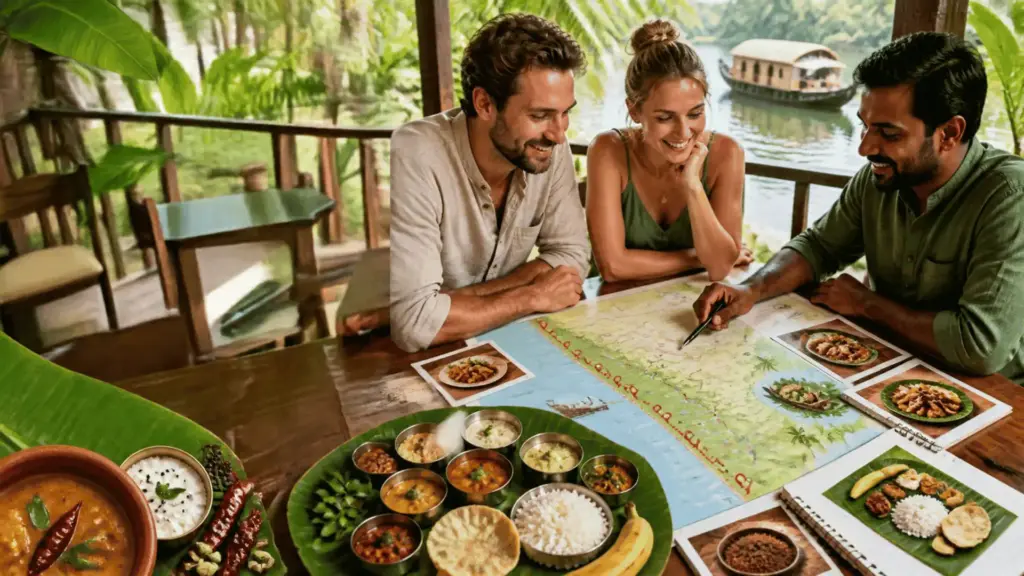
A little preparation makes it easier to enjoy the food without turning the day into a schedule to race through. Build your plans around where you are staying, the time you have and the kind of meal you want. For seasonal context, a season-by-season guide from Fabulous Kerala covers weather, festivals and activities that can shape your wider trip.
Choosing the best season and time of day
The most comfortable time for a food walk depends on the weather, the route and the opening hours of its stops. Markets and eateries have their own daily rhythms, so ask the organiser when particular places are most active. If your plans coincide with a festival or a busy travel period, confirm availability early and leave some flexibility in your schedule.
Allowing time for markets, meals and travel
Avoid placing a food tour between two tight transfers or booking a large meal immediately afterwards. Give yourself time to reach the meeting point, move between stops and linger over anything that catches your attention. If you are travelling between regions, factor in the journey as well as the meal; distances can make a seemingly short outing take much of the day.
Preparing for spice levels and dietary needs
Tell your guide about allergies, dietary restrictions and your preferred level of heat before the day begins. Ask whether the kitchen can accommodate your needs and how ingredients are handled, particularly if cross-contact is a concern. You can also ask for smaller portions or milder options, but it is best to confirm what is possible rather than assume every stop can adjust a dish.
Knowing local dining customs and etiquette
Follow your host’s lead when a meal is served, especially if you are unfamiliar with eating from a banana leaf or sharing dishes. Ask before photographing people or their work, and be considerate when a stall is busy. A friendly question is usually welcome, but give cooks and sellers time to answer when they are serving other customers.
Making the most of each experience
A good tour leaves space for curiosity as well as eating. You do not need to memorise every ingredient; noticing a few details and listening to the people who prepare the food can make the experience more vivid. Keep your plans light enough to pause when a conversation or an unexpected dish deserves more time.
Ask guides about ingredients and cooking methods
Questions about how a dish is cooked can open up more than a list of ingredients. Ask what gives it its texture, when it is usually eaten or how its preparation changes from one household to another. You will get a richer answer by showing interest in a cook’s own approach rather than looking for one definitive version of a regional recipe.
Visit markets with curiosity and respect
Markets are places where people shop and work, as well as interesting places to visit. Notice the colours, sounds and produce, but let your guide help with introductions and local etiquette. If you want to take photographs or speak with a seller, ask first and respect a refusal without making it awkward.
Keep notes on dishes and regional differences
A few quick notes can help you remember what you tasted after the details blur together. You might record the dish name, its main ingredients, where you ate it and what surprised you about the flavour. Later, comparing those notes can help you see how food changes from one region or meal to another without reducing it to a single recipe.
Support local cooks, producers and businesses
Where the tour gives you a choice, consider buying directly from a small producer or returning to an eatery you enjoyed. Be thoughtful about how you take up space, particularly in busy neighbourhoods, and follow the guide’s advice about appropriate ways to show appreciation. Small, considerate choices can help make a food experience enjoyable for both visitors and the people who live and work there.
.

Conclusion
The best Kerala cuisine tour is not necessarily the one with the longest list of tastings; it is the one that suits your curiosity, appetite and pace. Choose a route with clear inclusions, ask about food and practical needs in advance, and leave room to enjoy the people and places behind each meal. You may come away remembering a favourite dish, but also the conversations and local details that gave it meaning.
Frequently Asked Questions
What is a Kerala cuisine tour?
It is a food-focused experience that may include guided tastings, market visits, a shared meal or a cooking demonstration. The exact format depends on the organiser and itinerary.
Are Kerala food tours suitable for vegetarians?
Many Kerala meals include vegetarian dishes, but options differ by tour and stop. Tell the organiser about your diet before booking and confirm whether meals can meet your needs.
Can you join a food tour if you do not eat spicy food?
Often, yes, but spice levels and the ability to adjust dishes vary. Ask the organiser what food is likely to be served and whether milder choices are available.
Is a cooking class the same as a food tour?
No. A food tour usually centres on visiting places and tasting dishes, while a cooking class focuses on preparing food. Some experiences combine both elements.
How long should you allow for a food tour?
Allow the full duration stated by the organiser, plus time to reach the meeting point and travel afterwards. Walks may take a few hours, while market visits and meals can take longer.
What should you ask before booking a Kerala food tour?
Check the itinerary, group size, duration, meeting point, included food and transport, and whether dietary needs can be accommodated. Ask for clarification if any of those details are unclear.
What dishes might you encounter on a Kerala food journey?
Depending on the region and experience, you may come across appam, puttu, rice dishes, curries, seafood, vegetarian meals or snacks. Menus vary with the location, cook and season.